

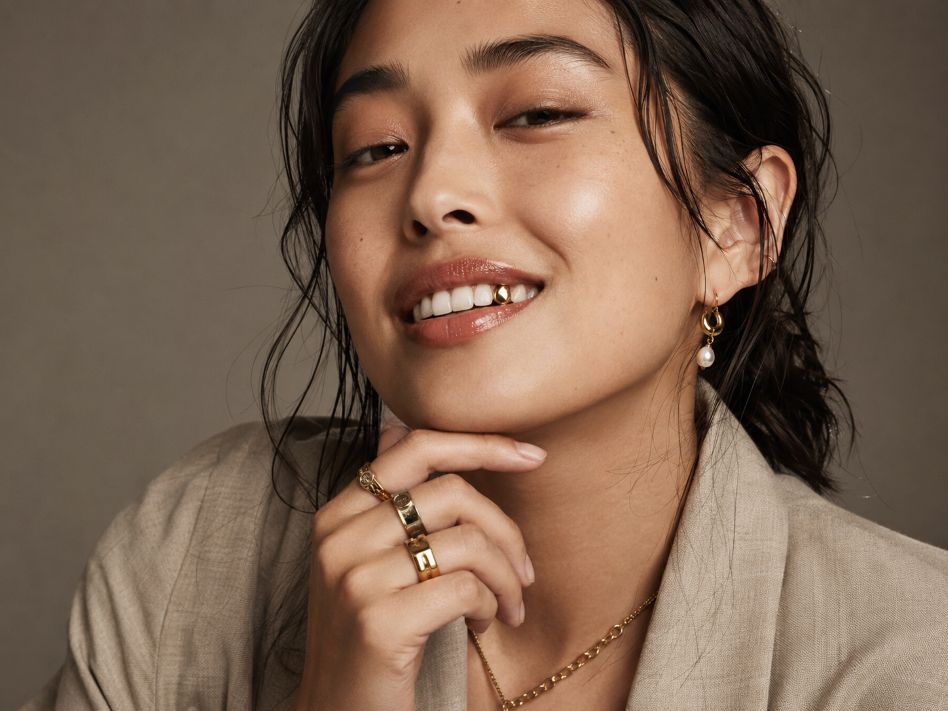
Jewelry has long been used to change how the body is seen. The Metropolitan Museum of Art notes that adornment has appeared across the head, ears, neck, chest, hands, waist, ankles, and other areas for thousands of years. Yet modern wardrobes often rely on familiar choices such as necklaces, earrings, bracelets, and rings. For someone trying to build a distinctive look, those categories can sometimes feel predictable.
Statement accessories are therefore moving into less conventional spaces. Decorative eyewear, hair pieces, body jewelry, and removable tooth accessories shift attention to areas traditional jewelry may overlook. Premade gold tooth caps are one example. Instead of framing the face from the ears or neck, they make the smile part of the styling. Rhino Grillz currently lists premade designs ranging from single-tooth and two-tooth pieces to fang, open-face, stamped, and iced-out styles.
1. Unconventional Placement Changes the Focal Point
Placement can make a familiar material feel different. A gold-colored accessory on a wrist creates one effect, while a metallic detail on the teeth creates another. The difference comes from where attention is directed.
The Metropolitan Museum of Art, through its “Jewelry: The Body Transformed” exhibition, describes jewelry as something that can accentuate, extend, or transform the body. That helps explain why placement matters. A statement does not always require a larger object. Moving decoration to an unexpected location can be enough.
2. Unusual Finishes Add Character
Finish is another way accessories become more expressive. Smooth metal looks clean and reflective. Matte textures, stamped surfaces, cut patterns, and stone-covered finishes add more visual detail.
The premade collection from Rhino Grillz shows this range. It includes grid-stamped pieces, diamond-cut designs with reflective facets, and iced-out versions covered with decorative stones. The general form stays similar, but the finish changes how bold the piece appears.
3. Personalized Designs Feel More Individual
Personalization remains an important direction in jewelry design. Gemological Institute of America researchers discussing new design technologies note that customization can push a piece toward a specific person, purpose, or story. That principle applies even when the accessory is small.
Initials, symbols, patterns, chosen materials, positions, and custom shapes can change how a piece is read. Personalization gives wearers more control over whether an accessory feels classic, playful, dramatic, or closely tied to their own style.
4. Open-Face Pieces Balance Visibility and Restraint
Statement jewelry does not need to cover a large area. Open-face tooth pieces show how negative space can become part of the design. Instead of covering the entire visible tooth surface, the metal forms an outline or frame around part of it.
That creates contrast between the natural tooth and the accessory. Rhino Grillz lists several open-face variations, including versions paired with fang shapes and designs for the upper or lower teeth. These options show how a noticeable accessory can still leave part of the natural smile visible.
5. Fang-Inspired Shapes Add a Theatrical Edge
Some accessories make a stronger statement by borrowing shapes associated with fantasy, costume, or performance. Fang-inspired tooth jewelry is a clear example. A pointed form changes the outline of the smile and creates a more theatrical effect than a plain covering.
Historical collections also show that adornment has long been tied to identity, status, ceremony, and visual transformation. The Metropolitan Museum of Art documents these roles across cultures. The Smithsonian National Museum of African American History and Culture also preserves photographs of performers such as Flavor Flav and Paul Wall wearing grillz as visible parts of their style.
6. Decorative Tooth Jewelry Makes the Smile Part of the Outfit
Traditional jewelry often sits around the face. Tooth jewelry places decoration directly within the smile. That makes the accessory visible when the wearer speaks, smiles, or poses for a photograph.
Decorating the teeth is not solely a modern idea. Smithsonian Tropical Research Institute has documented forms of intentional dental modification that date back thousands of years and varied widely by culture. Those practices were often permanent and culturally specific, so they are different from today’s removable fashion pieces. Still, the history shows that the mouth has long been used as a place for visible personal and social expression.
The effect can be subtle or dramatic. A single metallic tooth creates a small flash of color. Two-tooth pieces add more coverage. Full sets, patterned surfaces, and heavily decorated versions create a stronger focal point. Rhino Grillz lists examples across this range, showing how one accessory category can support very different levels of visual intensity.
Statement Style Is Becoming More Adjustable
The larger shift is less about replacing familiar pieces such as large hoop earrings, necklaces, rings, or bracelets and more about giving wearers additional ways to express personal style. Accessories can make an impact through placement, texture, shape, customization, or the amount of surface they cover. This allows traditional jewelry and newer forms of adornment to exist within the same personal look.
That flexibility matters because statement dressing is not one fixed look. One person may prefer a small metallic detail that appears only when they smile. Another may choose sculptural shapes, patterned finishes, or stone-covered pieces that become the main focus of an outfit. As accessory categories expand, wearers can adjust the intensity more easily, from a quiet detail to a highly visible statement.

